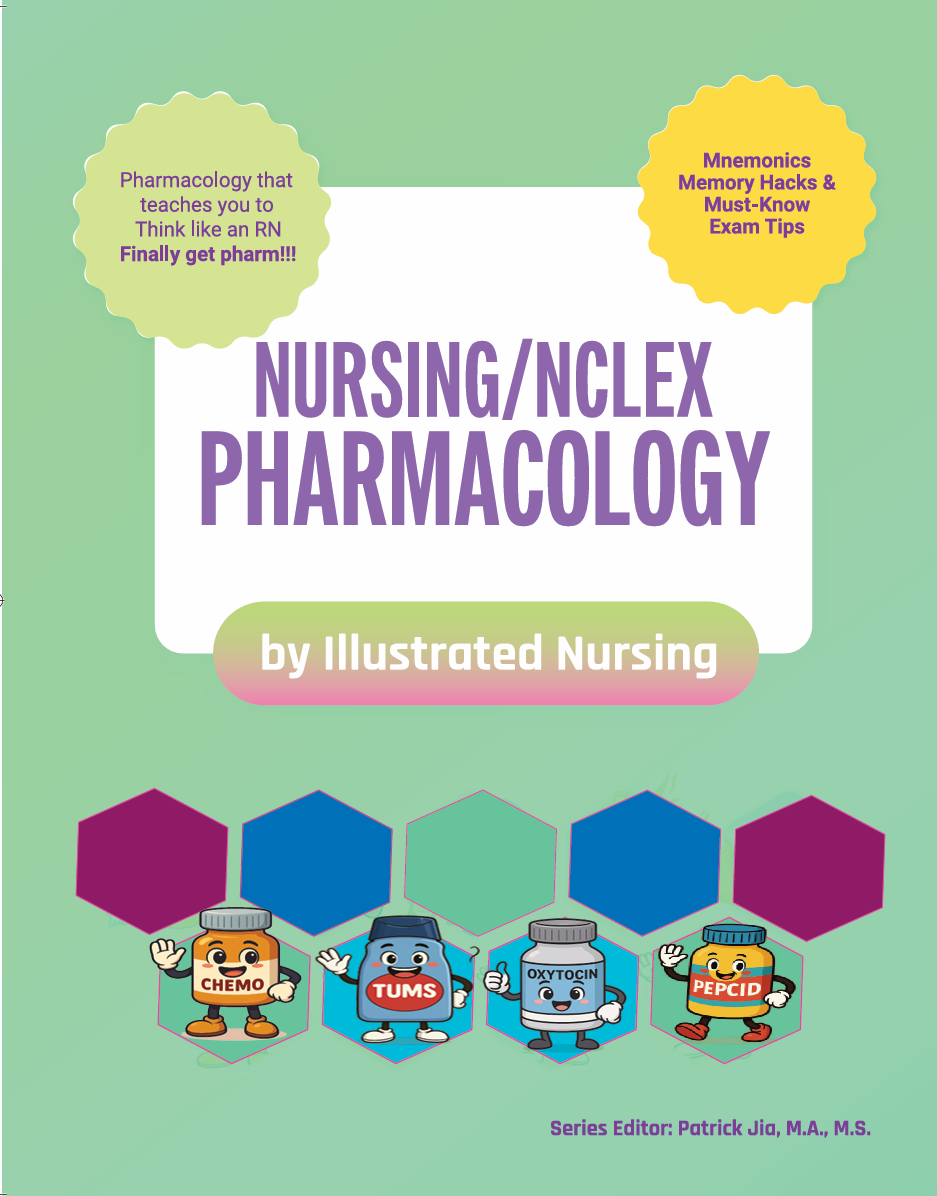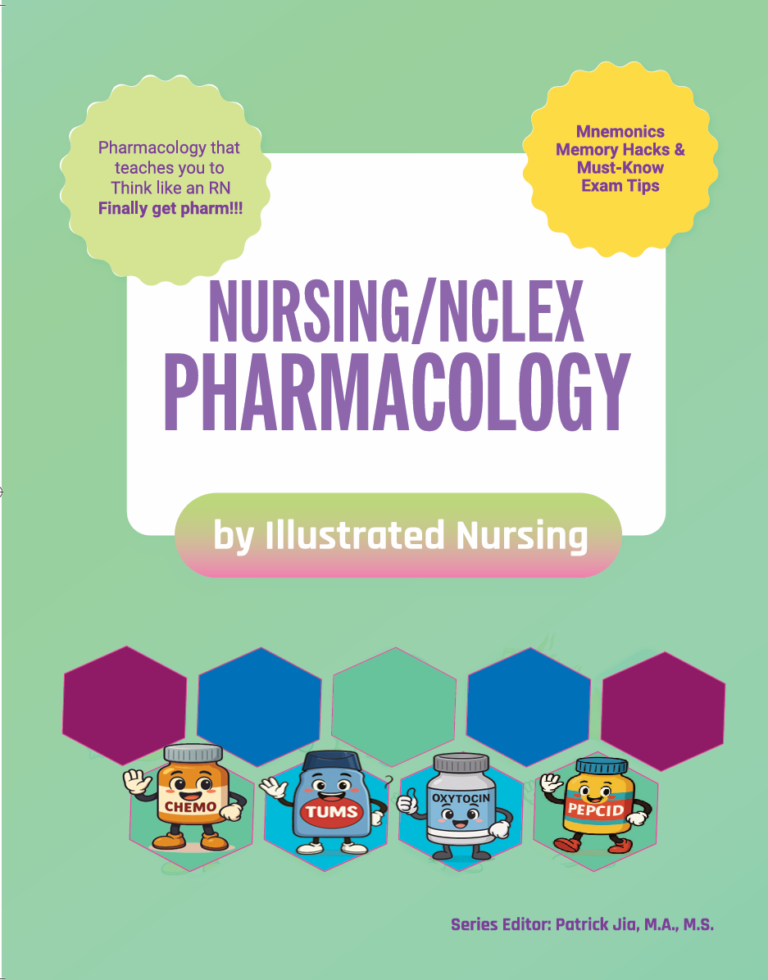
Our NCLEX Pharmacology 3D Flipbook and PRINT BOOK are out!

Get it at a low introductory price $39.99 (Original Price $59.99) for the 3D online flipbook and $79.99 for the PRINT Book

Any questions or concerns email us at nclex@illustratednursing.com

📘 Sample Pages – What’s Inside Our NCLEX Pharmacology book

215 visually engaging, content-packed pages
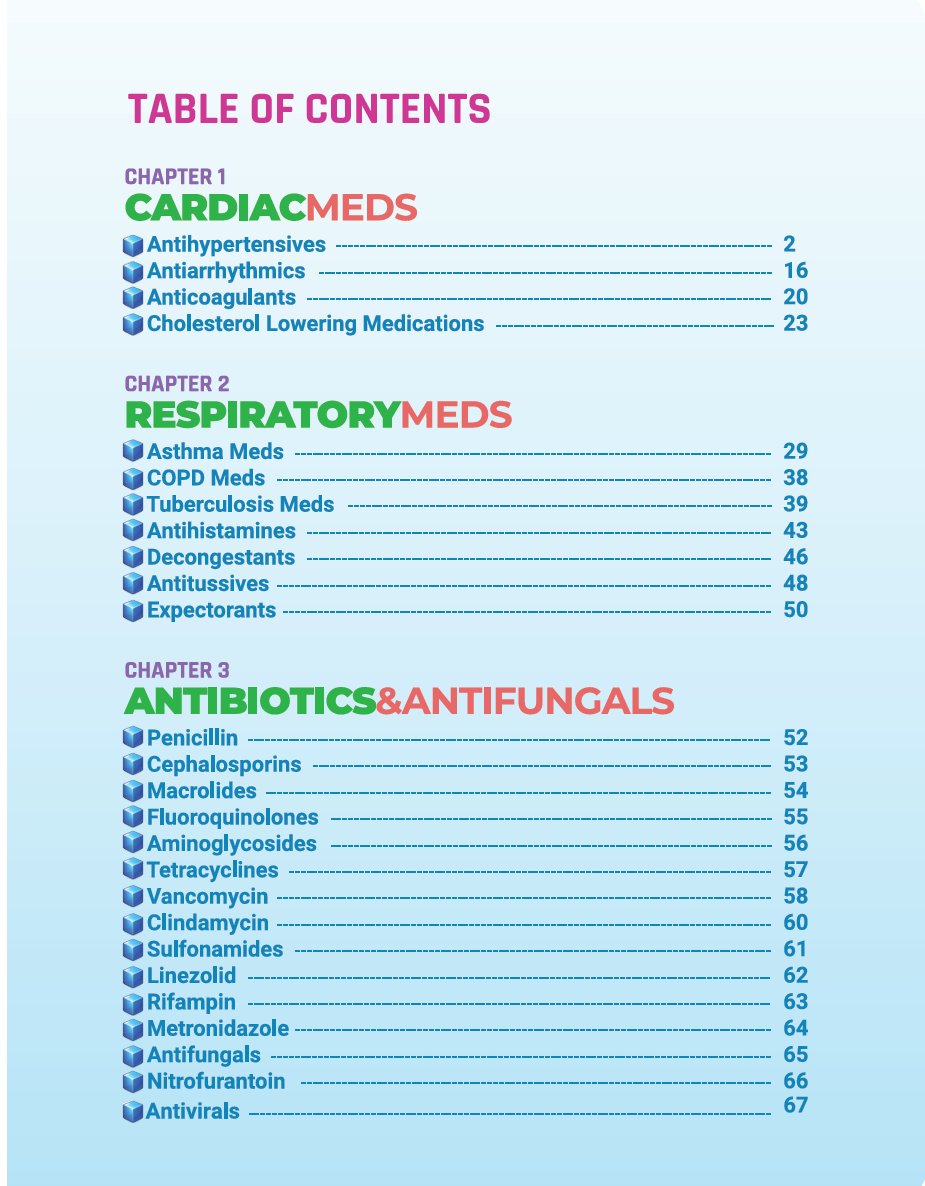
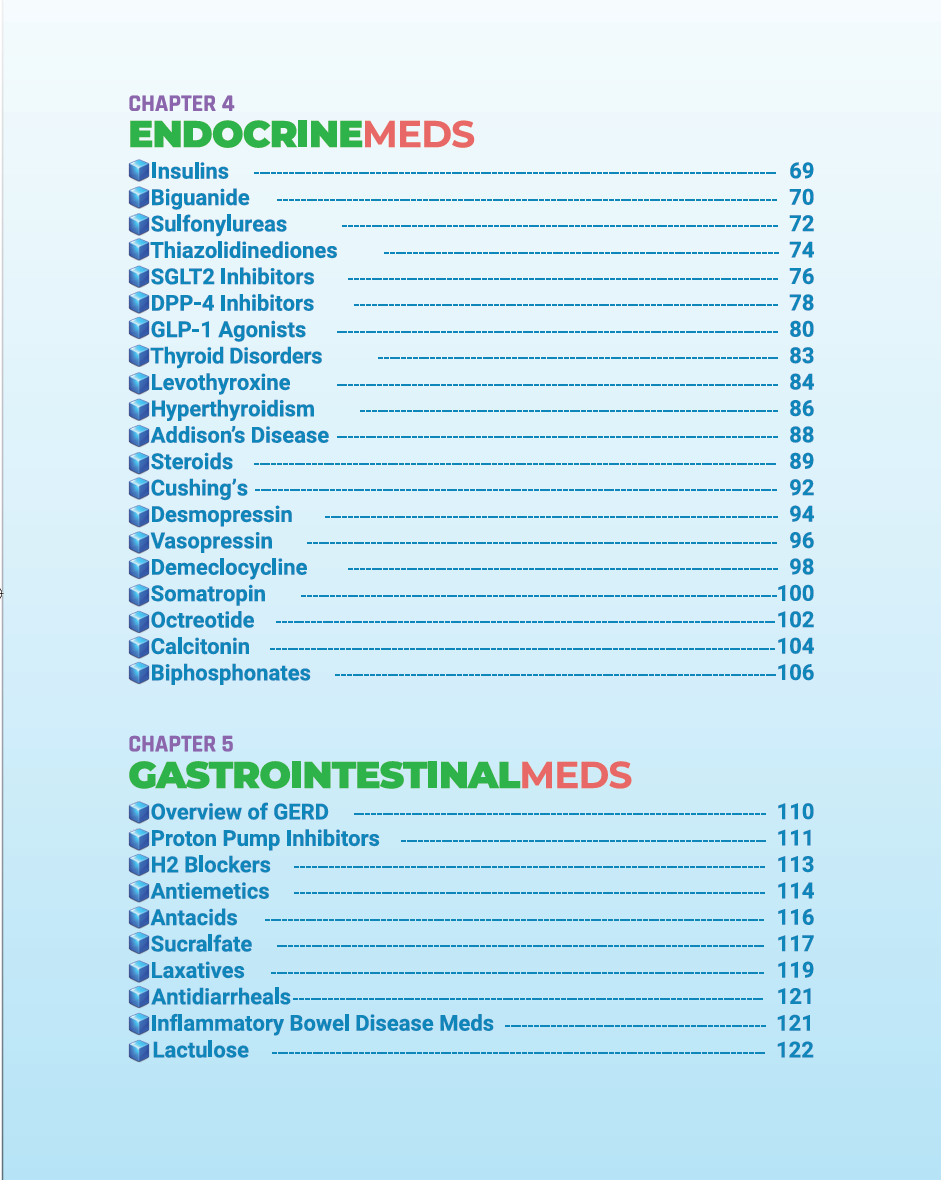
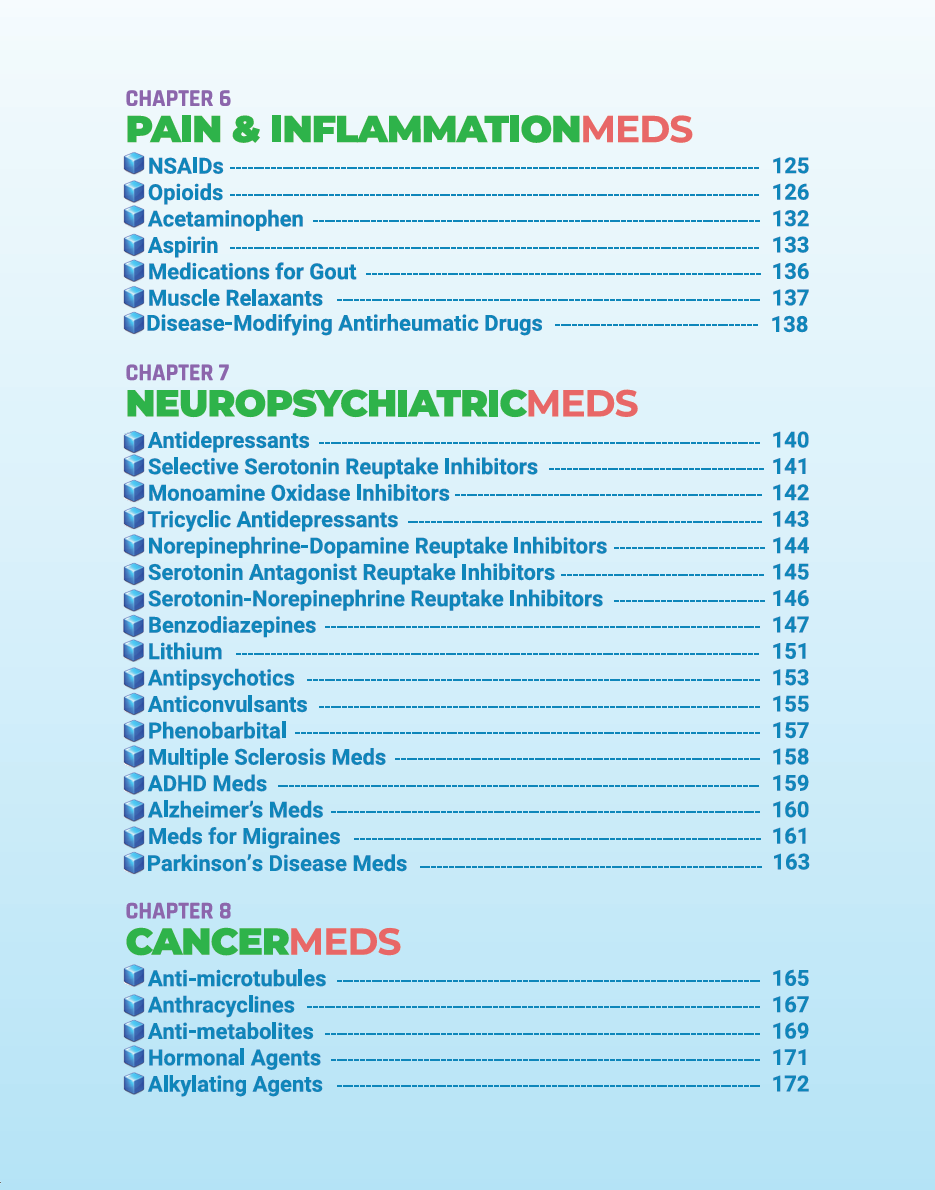
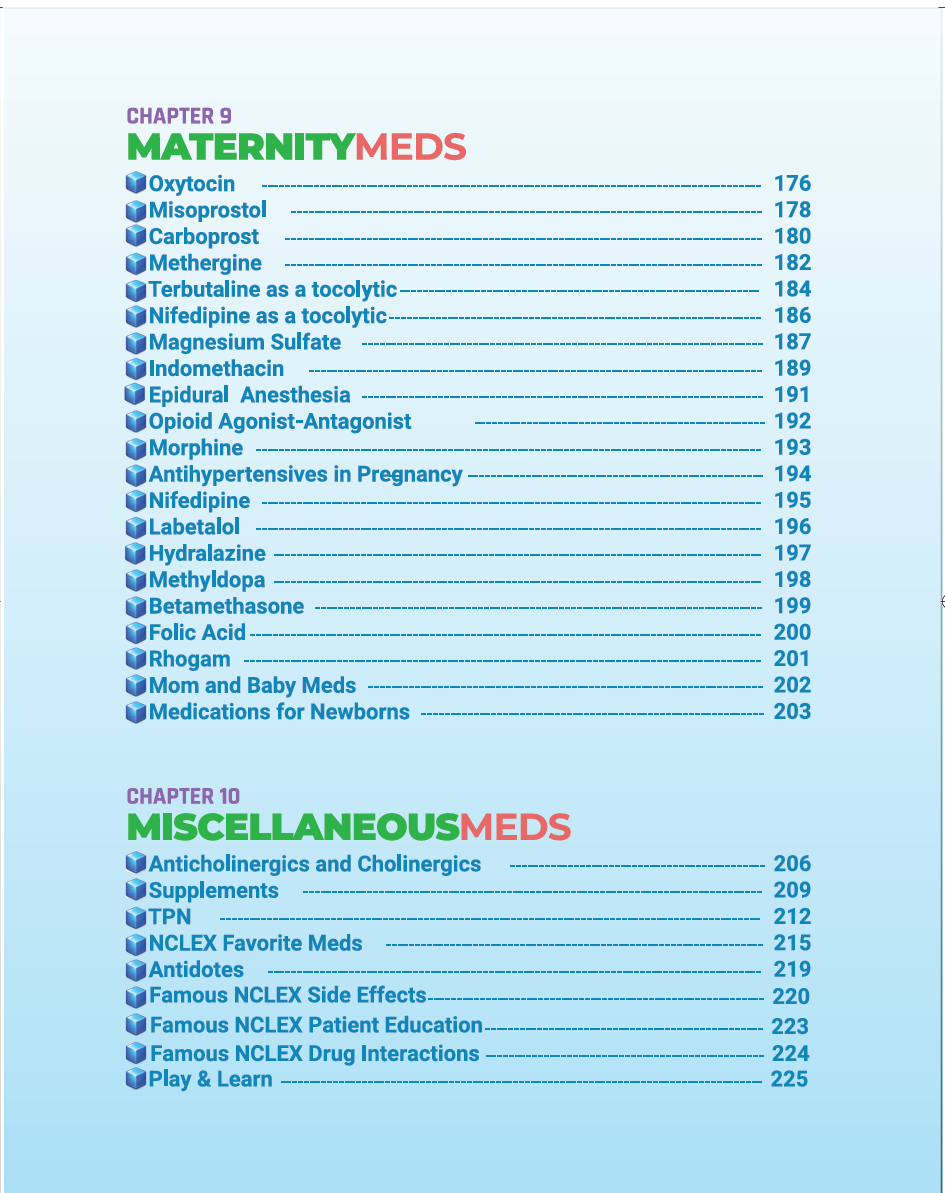
Covers all major body systems and drug categories, including:
  🫀 Cardiac
  🌬️ Respiratory
  🧠 Endocrine
  🚽 Genitourinary
  💊 Pain Management
  🎗️ Cancer
  🤰 Maternity
  🦠 Antibiotics
  🍽️ Gastrointestinal
  🌀 Neuropsychiatric
  🍄 Antifungals

Pages turn fast for a seamless, smooth study experience
Each page is organized and easy to remember
Designed to make pharmacology clear, clinical, and unforgettable
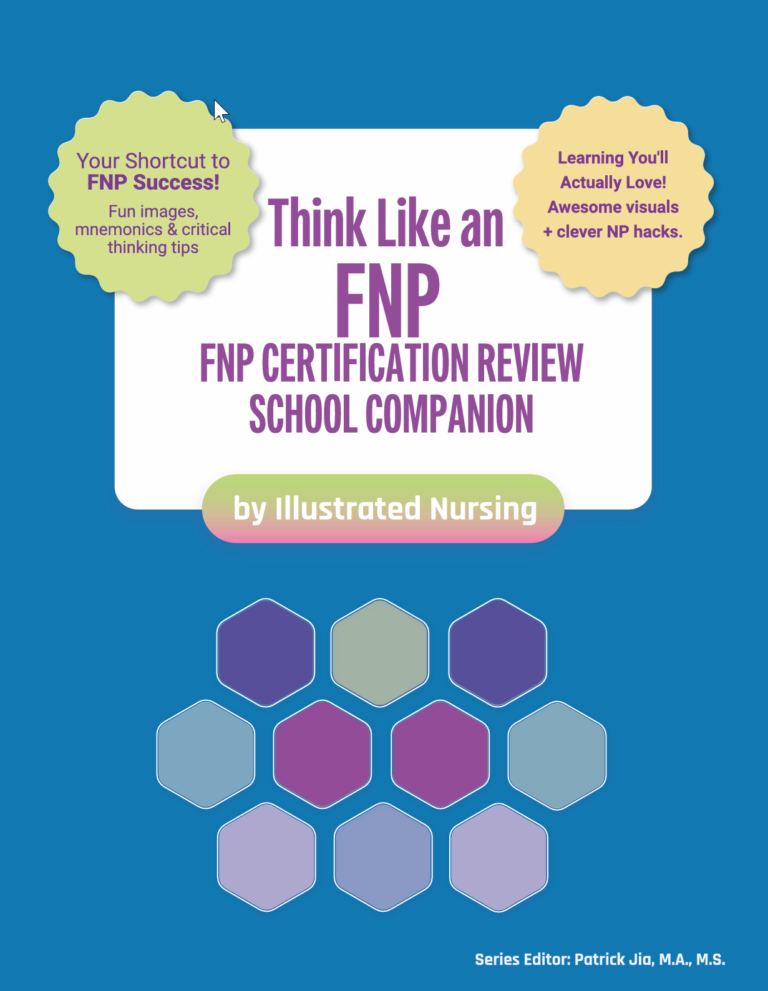
Perfect for NCLEX®, nursing school, and FNP review

Limited Time Only

Plus when you buy the book, we will give you access to our 3D flipbook for free!!!!!!

Of course, you get free shipping!Do not miss this opportunity. 

Our new NCLEX Pharmacology Study Guide has been designed to not only help those students who are having trouble with pharmacology, but foster critical thinking.

215 Pages

Glossy, high quality pages

Durable Cover

Excellent quality

You will love every page. No other book compares. 215 pages

Not Just Content — Real Understanding

You’ll get more than drug lists: this guide explains why meds matter, how to spot priorities, and uses accurate, test-aligned info that makes complex topics stick through clever mnemonics and memory hooks.
NCLEX Tips in Every Chapter

Strategically placed NCLEX-style tips, red-flag meds, and “must-know-before-test-day” callouts help you answer questions the way the exam wants you to.
Actually Fun to Read (Yes, Really!)

This isn’t another dry outline — it’s loaded with personality, humor, and relatable examples that make studying pharmacology surprisingly enjoyable.
Why are we better

Memory tricks

Packed with clever, easy-to-remember memory tricks that make even the hardest drugs stick — no more mindless memorization.

Learn Smarter

Illustrations, funny associations, and simplified breakdowns turn pharmacology from overwhelming to unforgettable.

Most Tested Drugs

No fluff — just the most tested drugs, side effects, antidotes, and interactions, all formatted for fast review and NCLEX recall.

Critical Thinking

Built-in critical thinking cues and NCLEX-style tips train your brain to recognize high-risk meds and choose the safest nursing actions every time.

NCLEX pharmacology

Introductory Price! Only $39.99 for the 3D flipbook online and $69.99 for the Print Book

This NCLEX Pharmacology Study Guide delivers high-yield, focused content to help you quickly master medication essentials. Designed for efficient learning, it trains you to prioritize safety, side effects, and nursing interventions with real exam-style logic.

Study & Learn

Most famous NCLEX Drugs

Warfarin
  • Check INR (goal usually 2–3, valves 2.5–3.5).

  • Teach consistent vitamin K intake; pregnancy X.

  • Antidote: Vitamin K

  • Watch for bleeding.

  • aPTT 1.5–2.5× control (IV heparin).

  • Antidote: Protamine.

  • Monitor platelets → risk of HIT

  • Bleeding precautions.

  • Sit/lie down → risk hypotension/headache.

  • Sublingual: 1 tab q5min × up to 3; call EMS if pain persists.

  • No PDE-5 inhibitors (sildenafil) within 24–48 h.

  • Patches: 10–12 h nitrate-free interval.

  • Morphine/Fentanyl
  • Check RR/LOC; hold if RR <12.

  • Antidote: Naloxone

  • Anticipate constipation → bowel regimen.

  • Loop (furosemide): check K⁺, BP, I&O; risk hypo-K⁺, ototoxicity (if given fast IV).

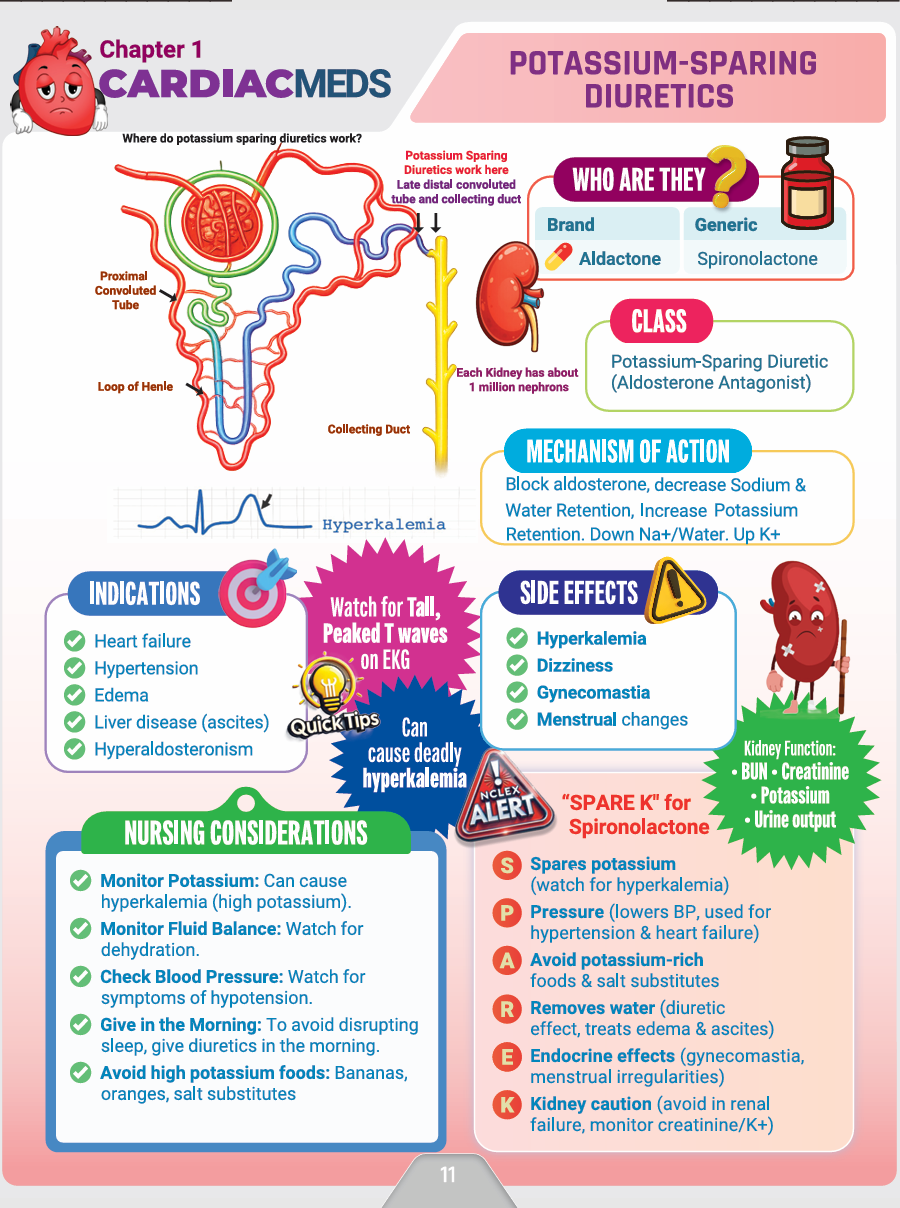
  • K-sparing (spironolactone): risk hyperkalemia, gynecomastia; avoid K⁺ supplements.

  • Check glucose before giving; food timing matters.

  • Peaks = highest hypoglycemia risk:

    • Lispro/aspart: onset ~15 min, peak 1–3 h.

    • Regular: onset 30–60 min, peak 2–4 h.

    • NPH: peak 4–12 h.

    • Glargine: no peak, don’t mix.

    • Mixing: draw clear (Regular) → cloudy (NPH).  RN
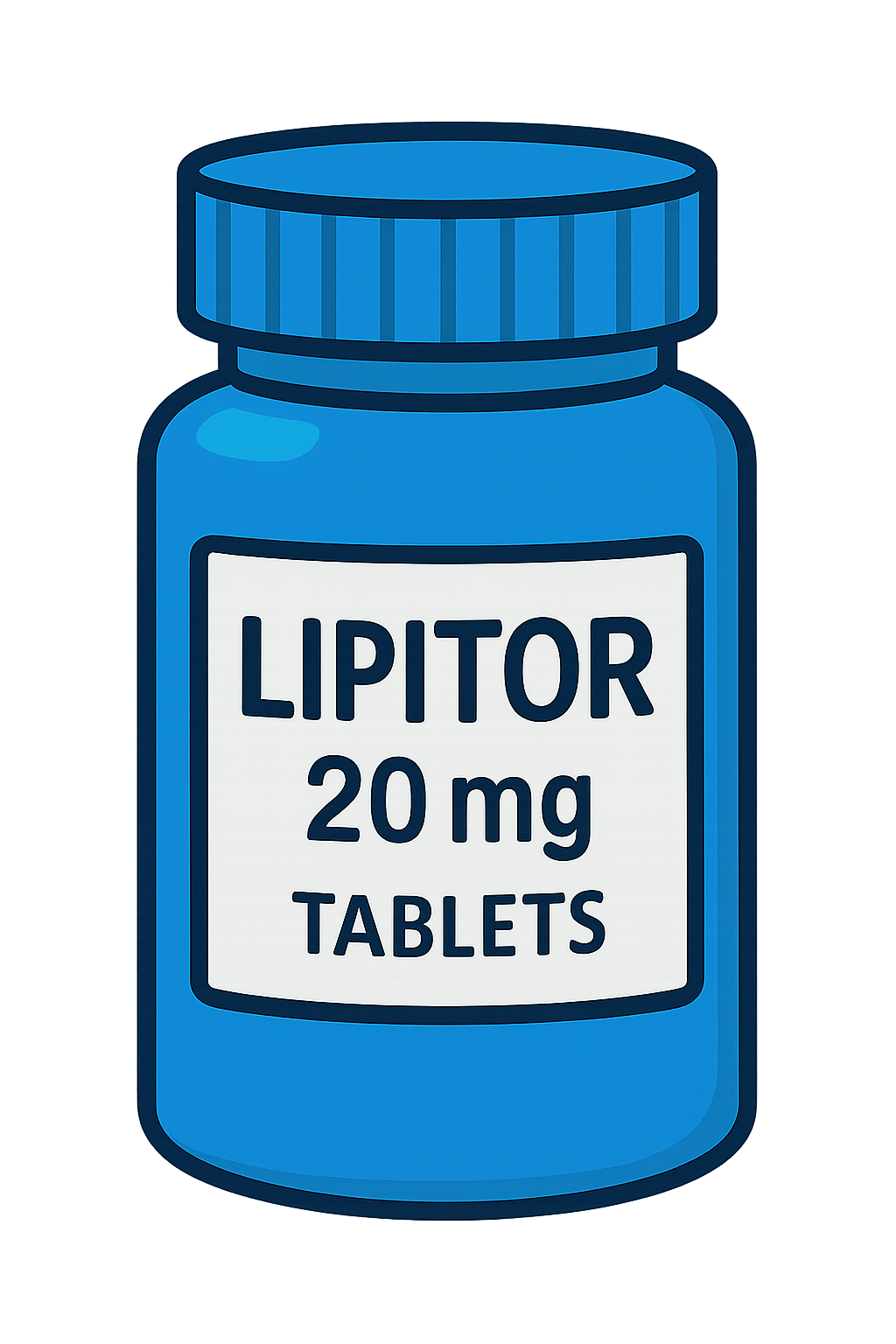
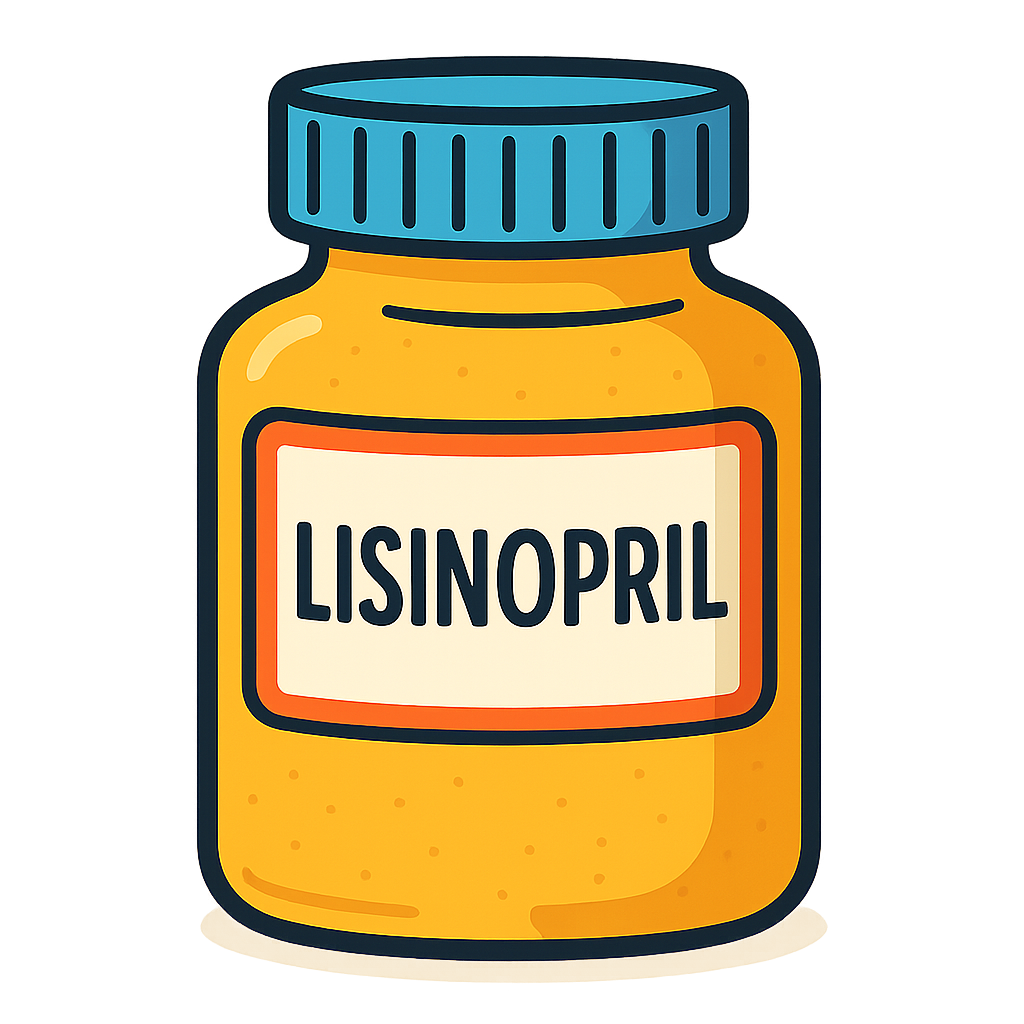
  • The -prils such as lisinopril
  • Monitor K⁺ and creatinine; watch for hyperkalemia.

  • Dry cough, rare angioedema (airway!).

  • Contraindicated in pregnancy.

Warfarin (Coumadin)

1. PT/INR

2. Bleeding

3. Consistent intake of foods with vitamin K

  1. Check Heart rate
  2. Check digoxin level if symptoms of toxicity: GI, Cardiac, & Visual Disturbances.
  3. Check potassium- Low K+ leads to increased risk of toxicity
  1. Monitor potassium level
  2. Monitor blood pressure/dehydration

Monitor for bleeding

  1. Persistent cough is benign
  2. Monitor for Hyperkalemia
  3. Monitor for angioedema (swollen lips)

1. Monitor Respiratory rate

2. Monitor LOC

  1. Check allergies before giving
  2. Monitor for allergic reaction
  1. Monitor kidney function
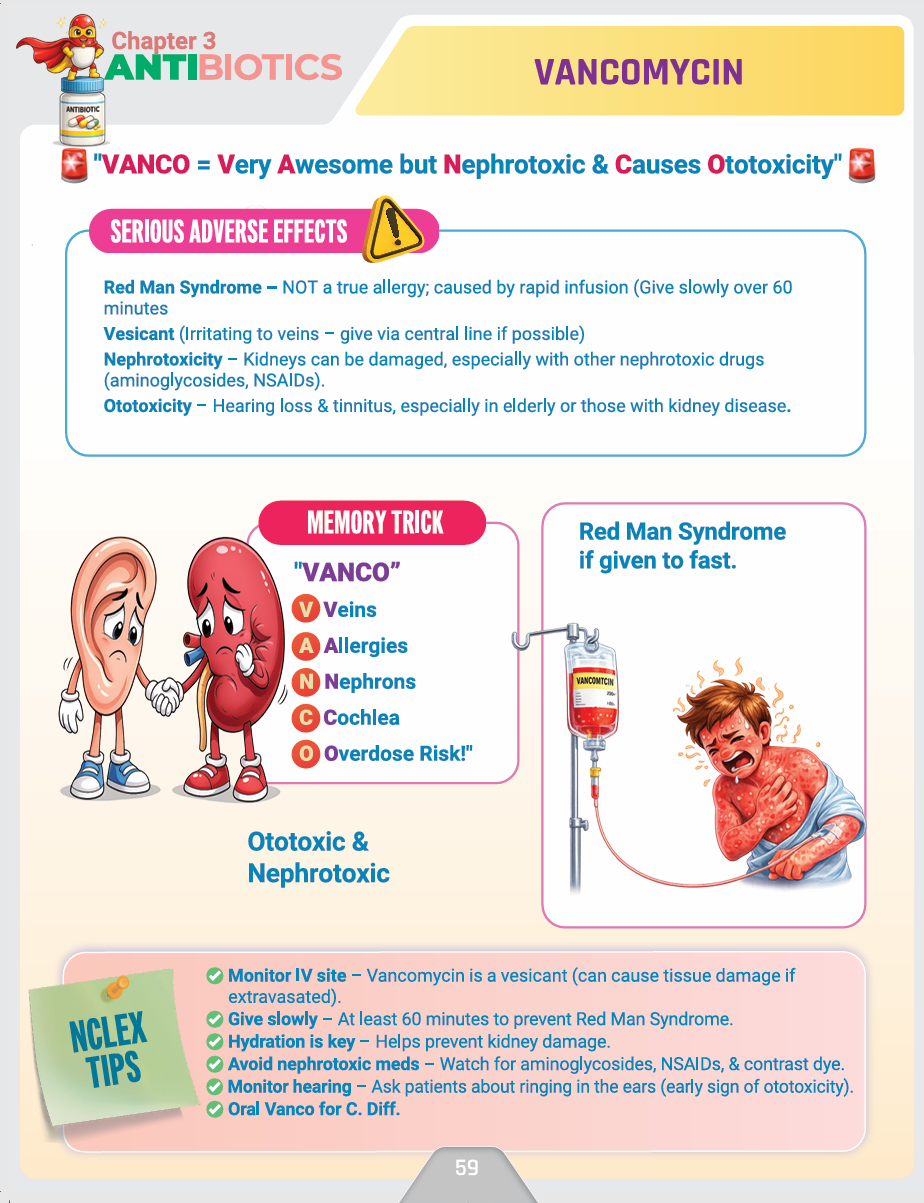
  2. Monitor for ototoxicity
  1. Monitor Heart rate and blood pressure
ACE Inhibitors

Persistent dry cough.

Muscle pain or rhabdomyolysis.

Hypokalemia.

Increased risk of Bleeding.

Tremors and requires monitoring for toxicity.

Hypoglycemia.

Bradycardia.

Lactic acidosis.

Nephrotoxicity and ototoxicity.

Respiratory depression.

Scroll to Top